
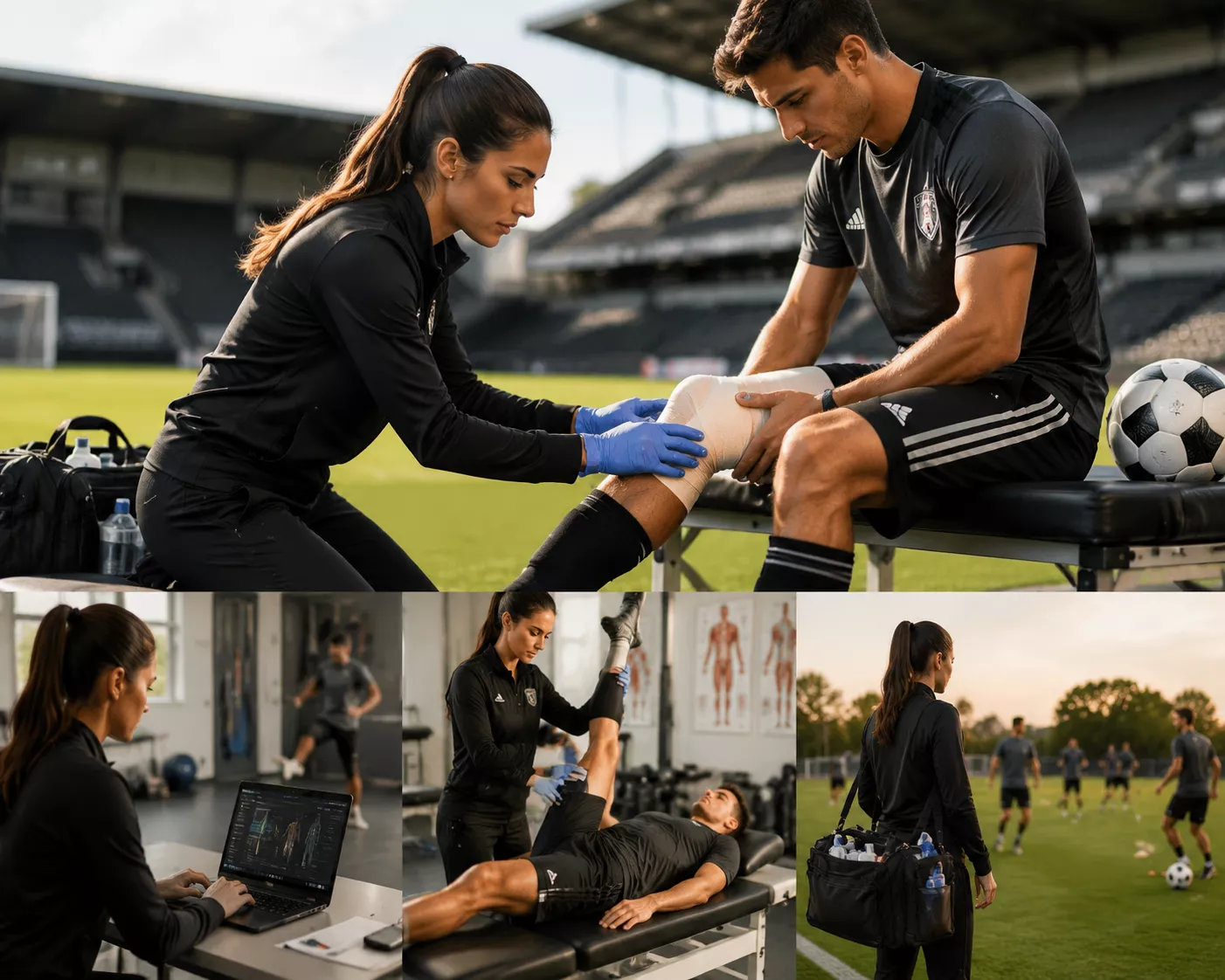
When we talk about a professional football team, most people immediately think about players like Lionel Messi or top forwards who score goals and win matches. Some think about coaches on the sidelines making tactical decisions.
But what often goes unseen is the other side of the system the healthcare and performance team that works behind the scenes to keep those players on the pitch, fit, and performing at the highest level.
Now here’s something important to understand.
Table of Contents
Healthcare Professionals Who Help Keep a Soccer Team Fit
The teams travel long distances for every match, often across countries and time zones. Because of this demanding schedule, professional football clubs maintain a strong technical support system, and at the center of it is a dedicated healthcare team.
Most football teams typically include 3 to 6 core healthcare professionals, while top-level clubs may have 10 or more specialists depending on the level of competition and resources.
These professionals work together as one unit to support player fitness, recovery, injury management, and overall performance.
Core Medical Staff
- Team Doctor / Sports Physician – Leads the medical department and is responsible for diagnosing injuries and managing player health. They also make the final decision on whether a player is fit to train or compete in matches.
- Lead Physiotherapist – Handles injury rehabilitation and designs recovery plans for injured players. They also guide daily treatment sessions to restore movement and performance.
- Assistant Physiotherapists – Support the lead physiotherapist during treatment and rehab sessions.They help manage multiple players during busy training and recovery schedules.
Performance & Prevention Team
- Sports Scientist – Monitors player performance using GPS and other tracking data. They help reduce injury risk by analyzing workload and fatigue levels.
- Strength & Conditioning Coach – Builds training programs to improve strength, speed, and endurance. They also focus on preventing injuries through structured physical preparation.
- Soft Tissue Therapist / Masseur – Works on muscle recovery and reduces stiffness after matches. They help players recover faster through massage and relaxation techniques.
Specialist Support Staff
- Club Dentist – Plans player diets and hydration strategies for peak performance. They ensure proper nutrition for recovery, energy, and match readiness.
- Sports Nutritionist – Supports players’ mental health, focus, and confidence under pressure. They help athletes manage stress, injuries, and performance challeng
- Sports Psychologist – Maintains oral health, which can impact overall fitness and well-being. They treat dental issues that could affect player comfort and performance.
How to Apply for a Healthcare Job in a Football Team
Getting a healthcare job in a professional football team is not easy, and the selection process is highly competitive. Most clubs receive applications from highly experienced doctors, physiotherapists, and performance specialists from around the world, so entry into this field requires strong preparation, patience, and consistent effort over time.
However, one important advantage in this field is reputation and trust. Once you perform well and build a strong impression with coaches, medical staff, or performance departments, your name starts getting recognized in the sports network. In many cases, coaches and staff prefer to work with professionals they already trust. If you are in their “trusted list,” you have a much higher chance of being selected again for future roles or teams, because reliability and proven performance matter more than anything else in elite sports environments.
Certifications Required to Become a Football Team Healthcare Professional
Before starting the application process, we must meet the basic eligibility criteria required for a football team healthcare role. These criteria ensure that the candidate has the necessary knowledge, skills, and practical exposure to work in a professional sports environment.
- Basic healthcare qualification (Medicine / Physiotherapy / Sports Science / Nursing)
- Sports First Aid Certification
- Sports Injury Management Certification
- FIFA / Sports Injury Prevention Courses (like FIFA 11+)
- Strength & Conditioning Certification
- Sports Taping & Manual Therapy Certification
- Sports Nutrition Certification
- Sports Psychology Certification
- Emergency Care in Sports Certification
- CPR & AED Certification
- Athlete Rehabilitation Certification
- Performance Analysis / Sports Science Certification
Stages to Enter a Football Team Healthcare Career

Stage 1: Reality Understanding
Sports healthcare is a highly competitive field. Even with strong certifications and qualifications, you will face thousands of professionals competing for the same opportunities. Elite football clubs hire only top-level experts because they invest heavily in player performance and expect world-class medical support.
For freshers, direct entry into elite football teams is extremely rare. The chances are very low because top clubs prioritize experienced professionals with proven sports background and international-level exposure.
Stage 2: Start at Small Clubs
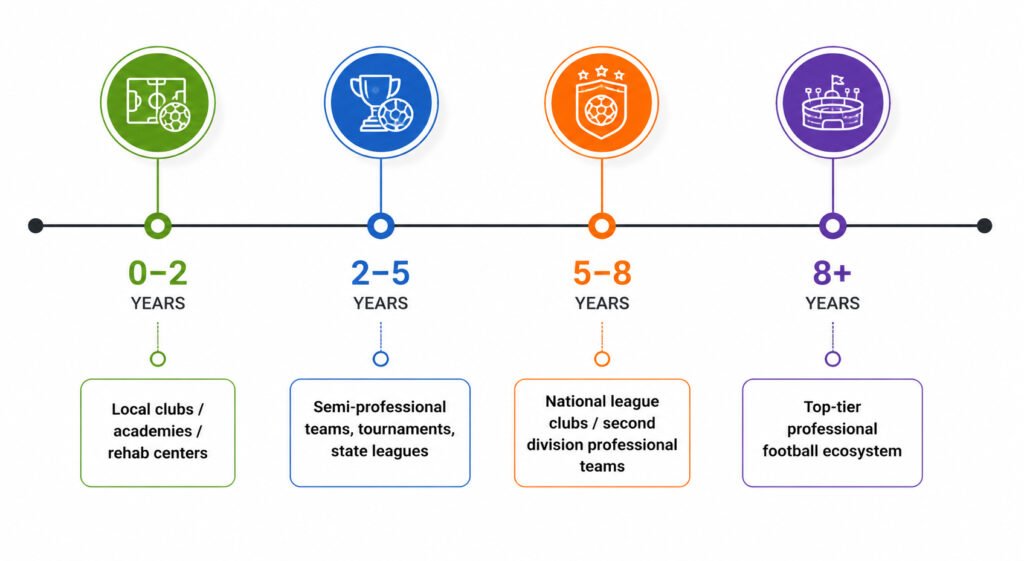
The real entry point is small or local football teams. These clubs usually have limited budgets, so they hire emerging healthcare professionals. Even though the salary may be lower, this stage gives you real match exposure, athlete handling experience, and understanding of football environments.
Stage 3: Build Experience & Exposure
Working in smaller teams helps you develop practical skills and confidence. You also gain opportunities to attend tournaments, interact with higher-level teams, and build professional visibility in the sports industry.
Stage 4: Networking & Recognition
As you gain experience, your reputation grows. Coaches, trainers, and sports professionals may start recognizing your work. This network becomes very important for future opportunities in bigger clubs
Stage 5: Career Growth Path
With consistent performance, you can gradually move from local teams to semi-professional and professional football clubs. Growth depends on experience, connections, and continuous improvement in sports healthcare practice.
Stage 6: Professional Positioning
At this stage, you should stay active on platforms like LinkedIn and sports job networks, and keep exploring opportunities in healthcare-focused sports platforms. Visibility and consistency are key to reaching higher-level football environments.
Most sports healthcare hiring is driven through a closed ecosystem rather than public applications. Internal referrals from coaches, physiotherapists, and existing medical staff play a major role because clubs prioritize trust and proven reliability. Along with this, visibility gained through match-day support, local tournaments, and academy-level exposure becomes a strong entry point, where professionals are evaluated in real-time performance environments rather than interviews.
Key Skills Evaluated for Football Healthcare Professionals
Even with full certifications, selection isn’t guaranteed because football clubs don’t hire only “qualified professionals” they hire performance-ready operators.
In elite football, healthcare staff must work inside a fast, high-pressure system where decisions are made in seconds, not minutes. So beyond medical knowledge, they need game understanding, quick judgment, and teamwork mindset similar to players.
Core Skill Expectations in Football Healthcare Roles
- Rapid Decision-Making Under Pressure: Injury situations during training or live matches require immediate assessment and action. There is no time for prolonged evaluation; decisions must be precise, fast, and clinically sound.
- Tactical Awareness of the Game: Healthcare professionals must understand match intensity, player positioning, and tactical phases. This helps in predicting injury risk and timing medical interventions without disrupting game flow.
- Spatial & Situational Awareness: Just like players read space on the field, medical staff must read movement patterns, collision risks, and fatigue indicators in real time to prevent injuries before they occur.
- Team Coordination & Communication: A football medical unit works as a synchronized system with coaches, analysts, and performance staff. Clear, concise communication is critical during substitutions, injury calls, and recovery planning.
- Workload Interpretation & Game Intelligence: Understanding GPS data, fatigue levels, and match intensity trends allows healthcare teams to make proactive decisions rather than reactive treatments.
- Emotional Control & High-Stress Management: Football environments are emotionally charged. Professionals must remain composed while dealing with injuries, coaching pressure, and time-sensitive decisions.
Timeline of Professional Healthcare Staff in a Football Career Path
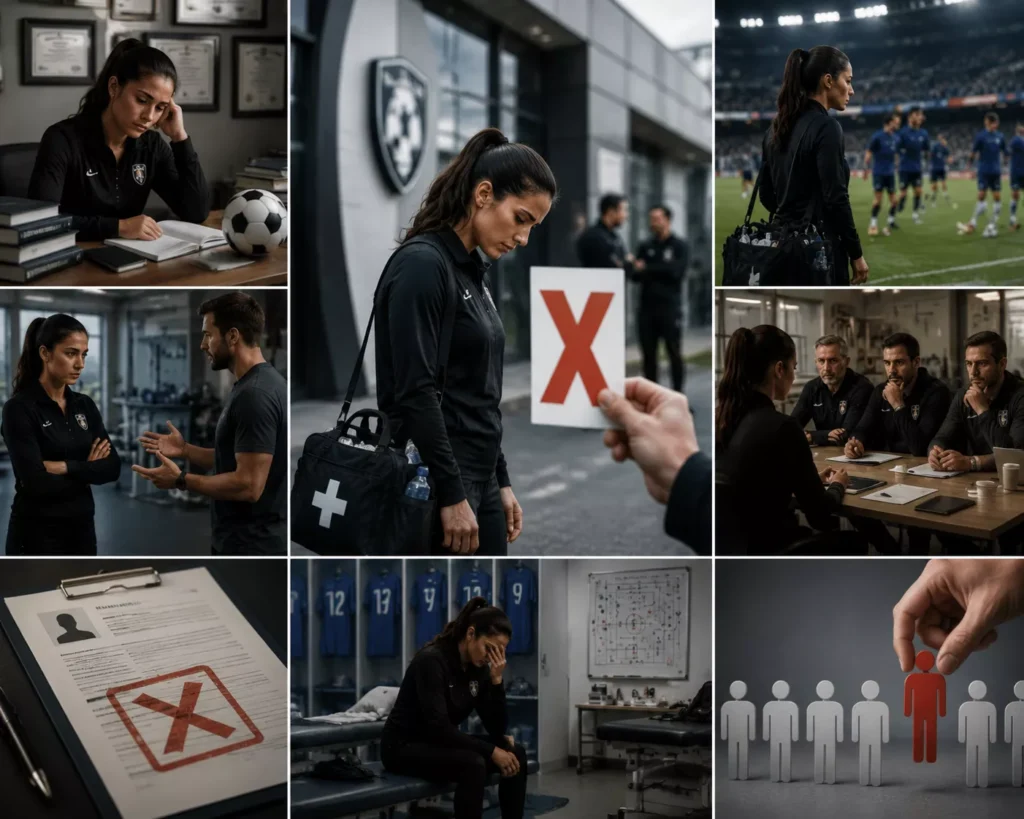
Common Reasons Candidates Get Rejected (Football Healthcare Roles)
1. No real match experience
Many candidates get rejected because they only have certificates but have never worked during real football matches. Clubs want people who have already handled injuries or medical situations on the field, where things happen fast and decisions must be quick. Without this experience, they are seen as not ready for real game pressure.
2. Poor communication in sports setup
Football teams need very clear and fast communication between doctors, coaches, and staff. Some candidates struggle to explain or respond quickly in team situations. If communication is not smooth, it can affect player safety and team performance, so clubs avoid such candidates.
3. No injury handling practice
Clubs prefer people who have actually treated injuries during games or training. If someone has only studied about injuries but never handled a real case on the field, they are seen as inexperienced. Practical skill matters more than theory in football healthcare.
4. Not fitting into team culture
Every football team has its own way of working. Some candidates do not adjust well to strict schedules, quick decisions, or team rules. If a person cannot fit into the team system, clubs may reject them even if they are skilled.
5. No connections in sports world
Getting a football healthcare job is not only about skills. Many jobs come through contacts in clubs, academies, or sports events. If a candidate has no network or visibility in the sports field, it becomes harder to get selected.
6. Too much theory, not enough practice
Some candidates have many qualifications but very little real field work. Clubs prefer people who have practical experience, even if they have fewer certificates. Real work experience is more important than long lists of degrees.
7. Trying to join big clubs too early
Many people apply directly to top football clubs without starting from small teams. This usually leads to rejection because big clubs only choose highly experienced professionals. Most careers start in local or smaller clubs first.
8. Cannot adjust quickly on field
Football situations change very fast. Sometimes injuries happen suddenly, travel plans change, or match pressure increases. If a candidate cannot adjust quickly and stay calm, clubs see them as not suitable for the job.
Still Confused, It Looks Hard to Achieve?
“Dreams don’t become reality by staying in your mind. They become real when you work for them every single day, even when no one is watching.”
Lionel Messi
A successful football healthcare career is not driven by extraordinary talent alone it is driven by clear intent, structured discipline, and long-term vision.
Most professionals who enter this industry don’t start at the top; they build capability through consistent exposure, real match environments, and continuous learning within sports ecosystems. What separates those who progress is not perfection, but persistence aligned with opportunity.
If your objective is to work in football healthcare, focus on operational readiness: develop core clinical competence, understand athlete management workflows, and stay active in sports environments where real-world experience compounds over time.
In this space, ambition is the entry point but execution, networking, and field adaptability are what convert it into a career trajectory.
FAQs – Football Healthcare Career Path
Is it really difficult to get a job in football healthcare?
Yes. The field is highly competitive and operates like an elite performance ecosystem. Demand is global, but entry-level openings are limited, especially in top clubs.
Can I get a football healthcare job if I’ve never watched football?
Yes. Watching football is not a requirement. Clubs hire based on medical skills, sports injury knowledge, and ability to work in high-performance environments.
Do I need to understand football tactics or rules?
Not initially. Basic awareness helps, but your core role is medical support, injury prevention, and player recovery—not gameplay analysis.
Can someone get a football healthcare job without knowing football?
Yes. Many professionals enter the field without strong football knowledge. Clubs prioritize medical, physiotherapy, and sports science expertise over fandom or match understanding
What is the minimum experience needed to enter football healthcare?
Most clubs expect at least 1–3 years of practical clinical experience in physiotherapy, sports science, nursing, or sports medicine before considering candidates for football-related roles.
Can a fresher directly get a football healthcare job?
In most cases, no. Professional football teams rarely hire freshers directly because the environment requires real-time decision-making and match exposure experience.
Do football healthcare staff get free travel?
Yes. In most professional clubs, travel is fully covered by the organization when you are part of the official team setup.
Are football healthcare jobs full-time or contract-based?
Both exist. Football healthcare roles can be full-time permanent positions or short-term contract roles, depending on the club and level.
What is the normal working time in football healthcare roles?
There is no fixed 9–5 schedule. Work depends on training sessions, match schedules, and travel plans.
Do football healthcare staff get leaves?
Yes. You do get leaves, but they are structured around the team calendar, not fixed weekends like regular jobs
Is football healthcare pay higher than normal hospital jobs?
Yes, in many cases professional football clubs pay more than standard hospital roles, especially at semi-pro and top-tier levels.
Is job security strong in football healthcare jobs?
depends on the level. Elite clubs = less stability, high performance pressure. Lower clubs = more stability but lower pay.